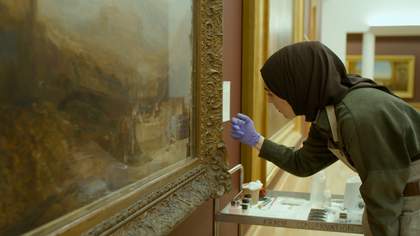
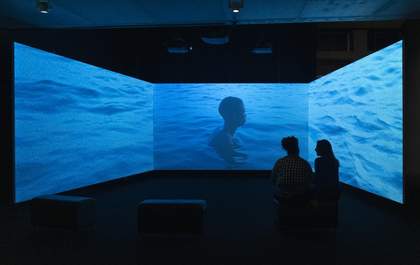
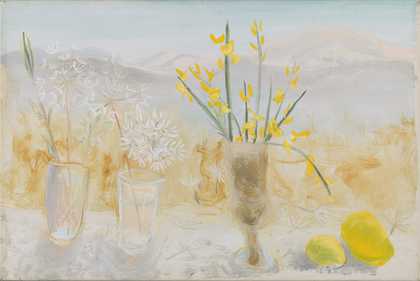
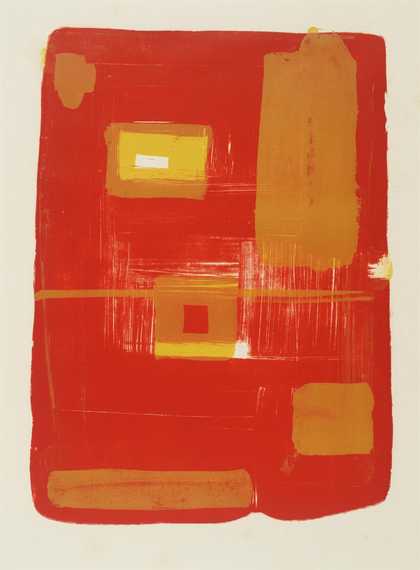
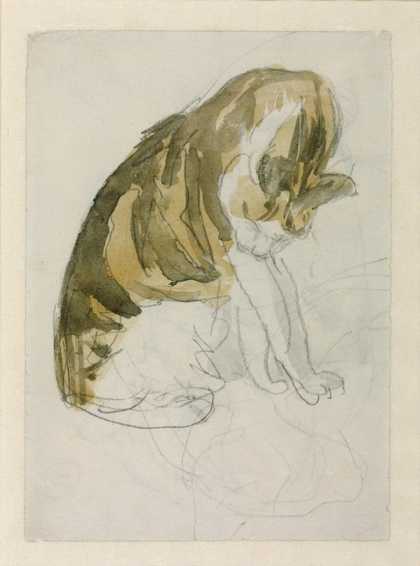
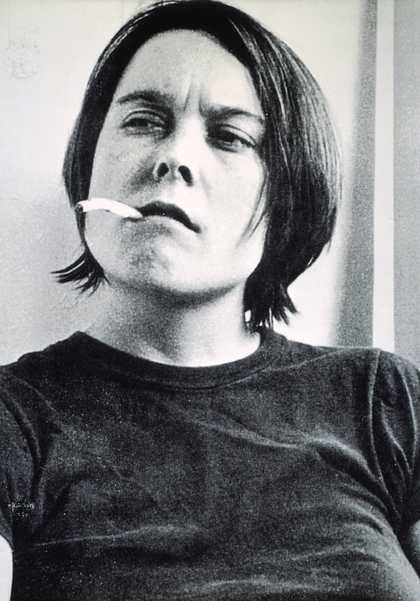
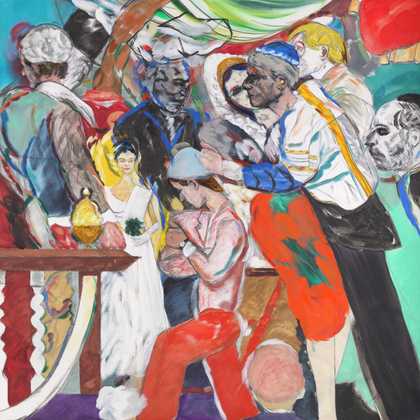
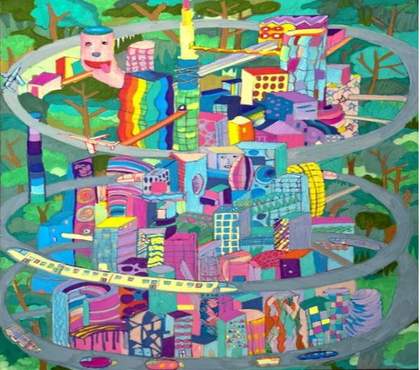
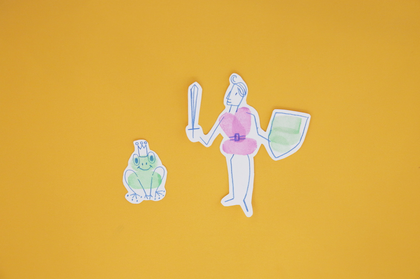
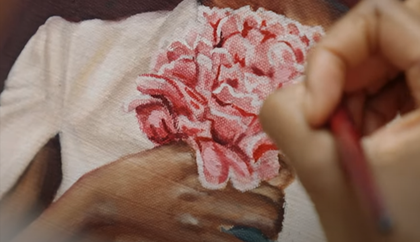
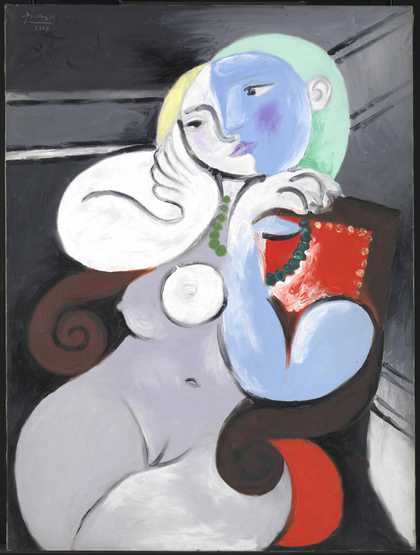
Discover art Learn about the lives of artists and the stories behind their work View this artwork Highlights Meet the Collection Artists Art in the collection Get Creative Listen Dig Deeper Highlights Conserving Frames Discover how picture frames at Tate are looked after 5 Women Artists' Stories Step inside the artist's studio with Tate Kids and students from St Stephen’s Primary School The Case of the Missing Painting Watch Tate's teams make an exciting discovery during the restoration of an Arthur Devis painting How to Create an Art-Inspired Garden Learn top gardening tips from the Head Gardener at Barbara Hepworth Museum and Sculpture Garden Meet the Collection Artists Left Right Who is Yoko Ono? Meet this artist, musician and activist Julianknxx – 'I listen with openness and find poetry' Meet the artist who explores new ways of looking to the past through performing memories, gathering stories and re-creating family fictions Sammy Baloji – "These images became like testimonies" Meet the artist documenting hidden histories of Congo through photographic archives Who is Petrit Halilaj? Meet the artist who creates colourful worlds full of imagination Browse all collection artists Art in the collection Recollect Winifred Nicholson 1973 Dageraad From the Air Donald Locke 1978–9 Simmering Sam Gilliam 1970 Alter-Ego Isaac Witkin 1963 Three Young Women Natalia Goncharova 1920 ID Crisis Zanele Muholi 2003 Red and Yellow Image : 1958 Patrick Heron 1958 Cat Gwen John c.1904–8 Fighting Fire with Fire Sarah Lucas 1996 The Wedding R.B. Kitaj 1989–93 Discover art in the collection Get Creative Design a future city Draw a Fairy Tale Let's do some finger printing and create your favourite fairy tale characters How to Paint a Flower like a Pre-Raphaelite Follow Glory Samjolly's step-by-step guide to painting, including modern day tips and tricks Create and share your own masterpiece Go to Tate Paint Discover more Listen Where Does Inspiration Come From? Fly under the radar, explore creative spaces, and discover the importance of drawing a sheep Women in Revolt! Podcast A 6-part mini-series exploring art, activism and the women’s movement in the UK in the 1970s and 80s The Art of Remembering What happens when people are forgotten and histories are erased? Explore Tate's podcasts Listen to more Dig Deeper Agony Artist: Dear Mx Mavis Discover how the artist Lubaina Himid gives a voice to people who have been overlooked throughout history Mari Katayama We talk to the artist about beauty, soft sculptures, and her self-portraits that are newly on display at Tate Modern Tate Research Centre: Learning Promoting research, knowledge exchange with the aim of informing practice in the field of learning in galleries Breaking News Explore how this movement inspired and united artists around the world More Art in Depth